Tuesday, 30 September 2014
MUFTI DAY
Tomorrow, 1st October is World Children's Day. To celebrate we are having MUFTI DAY, where children can wear their own clothes. It is VERY important in grade 5 that the children wear clothes and shoes they can do PE in.

Monday, 29 September 2014
Sunday, 28 September 2014

Español
Durante esta semana del 29 al 3 de octubre estudiaremos lo
siguiente:
- Uso de los signos de puntuación
- Practicar la lectura comprensiva
-Escribir creativamente sobre un tema que se dará en clase
-En IPC estaremos creando la cuidad del futuro
Recuerda lo siguiente: leer durante 15 minutos
diariamente el libro de lectura independiente, escribir un pequeño comentario
en el HCB y cambiar el libro. Repasar para los dictados semanales.
Tarea para el día viernes 3 de octubre: Abre el siguiente link, lee el texto y contesta las preguntas.
Wednesday, 24 September 2014
Ice Bucket Awareness


This week's Behind the News story is 'Ice Bucket Awareness.' Follow the link below to watch the story.
http://www.abc.net.au/btn/story/s4076170.htm
And then answer the questions below in full sentences.
1. Summarise the Ice Bucket Awareness story.
2. The Ice Bucket challenge is trying to raise awareness about Motor Neurone Disease. What’s
it known as in the USA?
3. Explain why Trinity got involved in the challenge.
4. Describe what happens to the body when someone develops Motor Neurone Disease.
5. What did Trinity notice in her dad before they knew he had MND?
6. There is no known cure for Motor Neurone Disease. True or false?
7. What’s the main thing that needs to happen, according to Trinity?
8. Explain what motor neurons are.
9. About how long has Corey lived with MND?
10. Why does Trinity say “I'd like to say thank you to all the people who've done the ice bucket
challenge.”
DUE: Wednesday 1st October 2014
Saturday, 20 September 2014
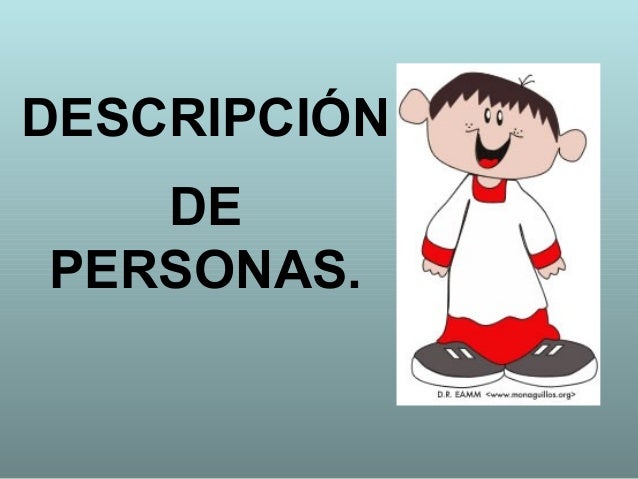
La Descripción
En la semana del 22
al 26 de septiembre estaremos estudiando lo siguiente:
- Las abreviaturas
- Descripción de personas
Los siguientes
enlaces pueden ayudar a repasar estos temas.



Wednesday, 17 September 2014
Behind the News: Introducing Kids to the World of News

In Grade 5 we are going to be improving our international mindedness and our listening comprehension by watching
a news story produced by ‘Behind the News,’ a news show made for upper primary
children. Follow the link below to watch this week’s story on fishing in Palau
and then answer the questions below in writing.
DUE: Wednesday 24th
September, 2014
Very important: If you have problems
with your internet at home, do not wait until Wednesday to inform your teacher.
Palau Fishing
1. Where is Palau? Locate it using Google Maps.
2. Palau is made up of ___________ tiny islands.
3. Finish the following sentence: A lot of people from Palau
earn money from...
4. How many people live in Palau?
5. Why is tuna fishing important to the people from Palau?
6. What do you think is meant by the statement “In Palau
fishing is a way of life.”?
7. What does Oreall’s dad teach Oreall and other fishermen?
Explain.
8. Name one of the tuna species that is now under threat due
to overfishing.
Do the quiz on the BtN website
http://www.abc.net.au/btn/quiz.htm
Tuesday, 9 September 2014

Saturday, 6 September 2014
LA CARTA
Durante la semana del 8 al 12 de septiembre estaremos estudiando lo siguiente:
Te recuerdo repasar los listados de palabras para tomar ejercicios y dictados los días lunes.

Click aqui....................................>Aumentativo y Diminutivo

Click aqui..............................................................>Ejercicio

Click aqui.................................................................>Ejercicio

Click aqui...................................................................>La carta
- Aumentativos y diminutivos
- Los dos puntos
- La carta
- IPC: Te envío la dirección para que investigar sobre El Salvador lo siguiente: clima, población, actividad económica, ríos, lagos, playas, montañas,volcanes y situaciones que preocupan a nuestro país. http://www.angelfire.com/md3/kafan/SvGen.htm
Es importante que leas el libro de lectura semanal 15 minutos diariamente.
Los siguientes enlaces te ayudaran a comprender mejor los temas de esta semana.

Click aqui....................................>Aumentativo y Diminutivo

Click aqui..............................................................>Ejercicio

Click aqui.................................................................>Ejercicio

Click aqui...................................................................>La carta
Friday, 5 September 2014
ESPAÑOL
¡BIENVENIDOS!
En Español estamos fomentando el uso de las
siglas: P.O.M.O. para todas las
escrituras creativas. Les recomiendo utilizarlo en casa, a continuación les
detallo el significado de esas siglas:
P. puntuación, revisar que no faltes:
comas, puntos (seguido, aparte, final, punto y seguido), signos de
interrogación o admiración, comillas y guión largo.
O. ortografía, que incluye tildes y
escritura correcta de las palabras.
M. mayúsculas. Chequear el uso de
mayúsculas al inicio de párrafo, después de punto y en los nombres propios.
O. orden. El escrito de be estar
ordenado y limpio antes de presentarlo.
En ortografía hemos trabajado con el guión largo,
específicamente cuando se escriben conversaciones o diálogos en los textos. Por
ejemplo:
EL ÁNGEL DE LOS NIÑOS
Francisco Briz Hidalgo
Cuenta una antigua leyenda que
un niño, que estaba a punto de nacer, le dijo a Dios:
- Me dicen que me vas a mandar mañana a la Tierra, pero... ¿cómo viviré tan pequeño e indefenso como soy?
- Entre muchos ángeles escogí uno para ti, que te está esperando, él te cuidará.
- Pero aquí en el cielo, no hago más que cantar y sonreír; eso basta para ser feliz.
- Tu ángel te cantará, te sonreirá todos los días y tú sentirás su amor y serás feliz.
- ¿Y cómo entenderé a la gente que me hable, si no conozco el extraño idioma que hablan los hombres? ¿Y qué haré cuando quiera hablar contigo?
- Tu ángel te juntará las manitas y te enseñará el camino para que regreses a mi presencia, aunque yo siempre estaré a tu lado.
En ese instante, una gran paz reinaba en el cielo, pero ya se oían voces terrestres y el niño presuroso, repetía suavemente:
- Dios mío, si ya me voy, dime su nombre... ¿cómo se llama mi ángel?
- Su nombre no importa, tú le dirás «mamá»...
- Me dicen que me vas a mandar mañana a la Tierra, pero... ¿cómo viviré tan pequeño e indefenso como soy?
- Entre muchos ángeles escogí uno para ti, que te está esperando, él te cuidará.
- Pero aquí en el cielo, no hago más que cantar y sonreír; eso basta para ser feliz.
- Tu ángel te cantará, te sonreirá todos los días y tú sentirás su amor y serás feliz.
- ¿Y cómo entenderé a la gente que me hable, si no conozco el extraño idioma que hablan los hombres? ¿Y qué haré cuando quiera hablar contigo?
- Tu ángel te juntará las manitas y te enseñará el camino para que regreses a mi presencia, aunque yo siempre estaré a tu lado.
En ese instante, una gran paz reinaba en el cielo, pero ya se oían voces terrestres y el niño presuroso, repetía suavemente:
- Dios mío, si ya me voy, dime su nombre... ¿cómo se llama mi ángel?
- Su nombre no importa, tú le dirás «mamá»...
«Dios no pudiendo estar en
todas partes
puso en el mundo a las madres»
( Proverbio árabe)
puso en el mundo a las madres»
( Proverbio árabe)
En IPC, nos enfocaremos: "la
importancia de los ríos", "Ríos más importantes de El Salvador y Centro América".
Específicamente en su ubicación geográfica…


Thursday, 4 September 2014
Here & Now, There & Then
Dear Parents,
Over the next 8 weeks Grade 5 will be following a unit of
work on a theme that focuses on ‘Host Country and Home Country’ and each class
will be working with a third country. 5th Hayward – France, 5th Linares –
Egypt, 5th Guzman – Morocco, 5th Molina – Colombia.
During this unit we will be focusing on Geography,
History, Society and International.
In Geography, we’ll be finding out:
• How to locate the host and home countries
• How these countries are connected
• What these countries are like
• How they are similar and different
In History, we’ll be finding out:
• The history of our host and home countries
• About history from people, photographs and maps
• About history from buildings and architecture
In Society, we’ll be finding out:
• If the host/home countries are in the news
• About issues that affect the host/home countries
In International, we’ll be finding out:
• What things we have brought to the host country
• How the host and home countries have worked
together
All of the work we are going to do will help your
child reach the learning goals. Children will be reading, researching, writing,
illustrating, working on their own and working in groups. We will be checking
to see how well your child has learned through particular activities and asking
children to explain their work, perhaps to you.
We already know the interest you take in your
child’s work. If you can, please discuss with your child the work they have
done as the term progresses and let them teach you.
Talk with your child about your host country and
home country and their third country. What do you like best about these
countries? How are they the same and how are they different? Look at maps and
globes together to locate where you are living now and where you used to live.
If your child has some work to research, please help
them, but without actually doing the work. If you have the chance to further
their interest in the ideas of this theme please take it, but your enthusiasm
and interest is most important.
By the end of the unit, we hope your child has
achieved all of the learning targets. We hope they have had an enjoyable time
in the classroom. And we hope you have enjoyed seeing your child work with
enthusiasm. If you have any comments about the work your child has done, please
get in touch.

Subscribe to:
Posts (Atom)